- Saltar para a Navegação: n
- Saltar para o Conteúdo: x
- Saltar para a Pesquisa: p
- Saltar para Acessibilidades e Ajuda do site: a

cooperativa de ensino superior, politécnico e universitário
Início < I&D < Centro de Investigação em Ciências da Saúde < Research Activity < GCD - Dental Sciences Group < Craniofacial Morphogenesis
Craniofacial Morphogenesis
- Leader:
- Teresa Pinho, PhD
Major interests
Our main goal is to investigate the genetic basis of the developmental absence of maxillary lateral incisors, as well as to define the associated dental and extra-dental phenotypes.
Our specific aims are:
- to analyze the dental phenotypes associated with familial maxillary lateral incisor agenesis (MLIA);
- to measure maxillary-cranium-facial parameters and to evaluate whether putative abnormalities may occur as a consequence of MLIA or, alternatively, as an associated phenotype with a common aetiology of developmental defect;
- to establish a DNA bank for maxillary lateral incisor agenesis probands, families and for controls;

- map loci involved in maxillary lateral incisor agenesis; and
- to identify polymorphisms associated with increased susceptibility to maxillary lateral incisor agenesis, through a candidate gene approach.
For that we are using the following tools.
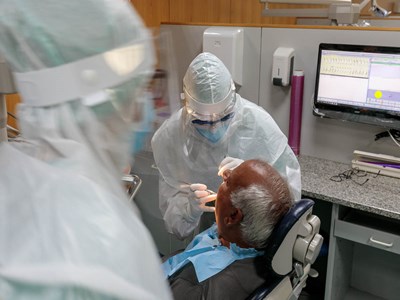
A dental panoramic radiography and detailed clinical information;
- Lateral X-ray of the facial profile in order to measure maxillary-cranium-facial parameters;
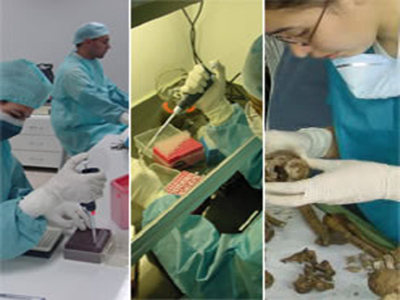
- DNA extraction from patients samples with MLIA and from controls without MLIA in a Portuguese population;
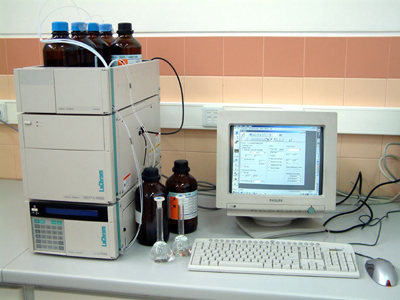
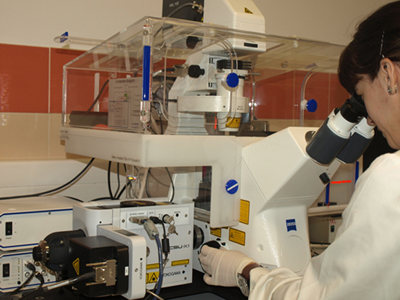
- Approximately 800 two-pair repeat microsatellite genetic markers selected from the Genethon human linkage map to be genotyped in the family members available. DNA fragments of interest will be amplified by polymerase chain reaction (PCR), using fluorescent-labelled primer pairs. Genotypes will be determined using GeneMapper version 4.0 software. For the case-control study, after the selection of the tagging SNPs, we will use a multiplex approach using theSNaPshot technique that will be performed using the SNaPshot® Multiplex Kit. SNP frequencies between cases and controls will be compared in order to identify MLIA risk variants.
Research Team
| Name | Position | Contact |
| Teresa Pinho, PhD | Assistant Professor | teresa.pinho@iscsn.cespu.pt |
| Fernando Mário Barbosa, PhD | Assistant Professor | fmariobarbosa@gmail.com |
| Márcia Costa, PhD | Assistant Professor | marcia.costa@iscsn.cespu.pt |
| Rui Madureira, PhD | Assistant Professor | rui.madureira@iscsn.cespu.pt |
| Maria João Duarte, PhD Student | Assistant | mariajoao@calheiroslobo.com |
| Paulo Miller, BSc | Assistant | paulo.millier@iscsn.cespu.pt |
Relevant Publications
Pinho T, Neves M, Alves C.(2010) “Multidisciplinary management including, periodontics, orthodontics, implants and prosthetics in an adult case”. American Journal of Orthodontics and Dentofacial Orthopedics. (in press)
Pinho T. (2010) “Impaction of both maxillary central incisors and a canine: Case Report”. American Journal of Orthodontics and Dentofacial Orthopedics. (in press)
Pinho T, Figueiredo A. (2010) “An Orthodontic-Orthognathic surgical treatment in a Class II subdivision: occlusal plan alteration”. American Journal of Orthodontics and Dentofacial Orthopedics. (in press)
Pinho T, Maciel P, Lemos C, Sousa A. (2010) “Familial aggregation of maxillary lateral incisors agenesis” Journal Dental Research.; 89(6):621-625.
Pinho T, Silva-Fernandes A, Bousbaa H, Maciel P. (2010). “Mutational analysis of MSX1 and PAX9 genes in Portuguese families with maxillary lateral incisor agenesis” European Journal of Orthodontic, ;32:582-588.
Pinho T. (2010) “Board Francais d'Orthodontie” International Orthodontics”; 8(2):190-204.
Pinho T, Neves M, Alves C. (2009) “Impacted Maxillary Central Incisor: Surgical Exposure and Orthodontic Treatment: A Case Report”. American Journal of Orthodontics and Dentofacial Orthopedics, (in press).
Pinho T. (2009) Classe III– Case report “European College of Orthodontics. Commission of Titularisation. International Orthodontics”; 7(4):404-414
Pinho T, Maciel P, Pollmann C. (2009) “Developmental disturbances associated with agenesis of permanent maxillary lateral incisors”. Britsh Dental Journal. Dec 19;207(12):E25. Epub Oct 30.
Pinho T, Tavares P, Maciel P, Pollmann C. (2005). Developmental absenceof maxillary upper lateral incisors in the Portuguese population. European Journal of Orthododontics; 27(5):443-449.
Costa Pinho TM, Figueiredo Pollmann MC. (2004) “Study of the frequency and the features of supernumerary teeth found in one Portuguese population”. Bull. Group. Int. Rech. Sci. Stomatol. Odontol; 46:52-62.
Costa Pinho TM, Ustrell Torrent JM, Correia Pinto, JG. (2004) “Orthodontic camouflage in the case of a skeletal Class III malocclusion”. World Journal of Orthodontics; 5(3):213-223.
Pinho T. (2003) “Disarmonía dentomaxilar marcada y mordida em "tijera"parcial, tratada sin extracciones”. Revista Ibero-Americana de Ortodoncia; 22(1):39-51.
Pinho T, Ustrell Torrent T, Correia Pinto J. (2005). “Retention of permanent incisors by mesiodens: a case report”. Gnathos;7:35-42.
Pinho T. (2004) “Skeletal Class III in a case with upper lateral incisors agenesis”. Gnathos;5:33-41.
Pinho T, Correia Pinto, Ustrell Torrent (2003) “Maloclusión tratada com extracciones seriadas”. Ortodoncia Española; 43(3):180-193.
Pinho T. (2003) “Agenesis of Upper Lateral Incisors. Case study: Orthodontic and restaurative procedures”. Gnathos; 2:35-42.
Projects
Project title:. Mutational screening of AXIN2 gene in a group of Portuguese families with maxillary lateral incisor agenesis
Funding entity: CESPU CRL
Project identification: 07/GCD/CICS/09
Covered period: From 2009 to 2010)
PI: Teresa Pinho
Project title:. Clinical, genetic and molecular study of the agenesis of maxillary lateral incisors
Funding entity: CESPU CRL
Project identification: 1F/19/2005/CESPU
Covered period: From 2005 to 2006
PI.: Teresa Pinho